Resistance Checking with Sunshine DT17N Multimeter
Learn how to measure resistance accurately on smartphone motherboards. Detect open lines, short circuits, and faulty components effectively.
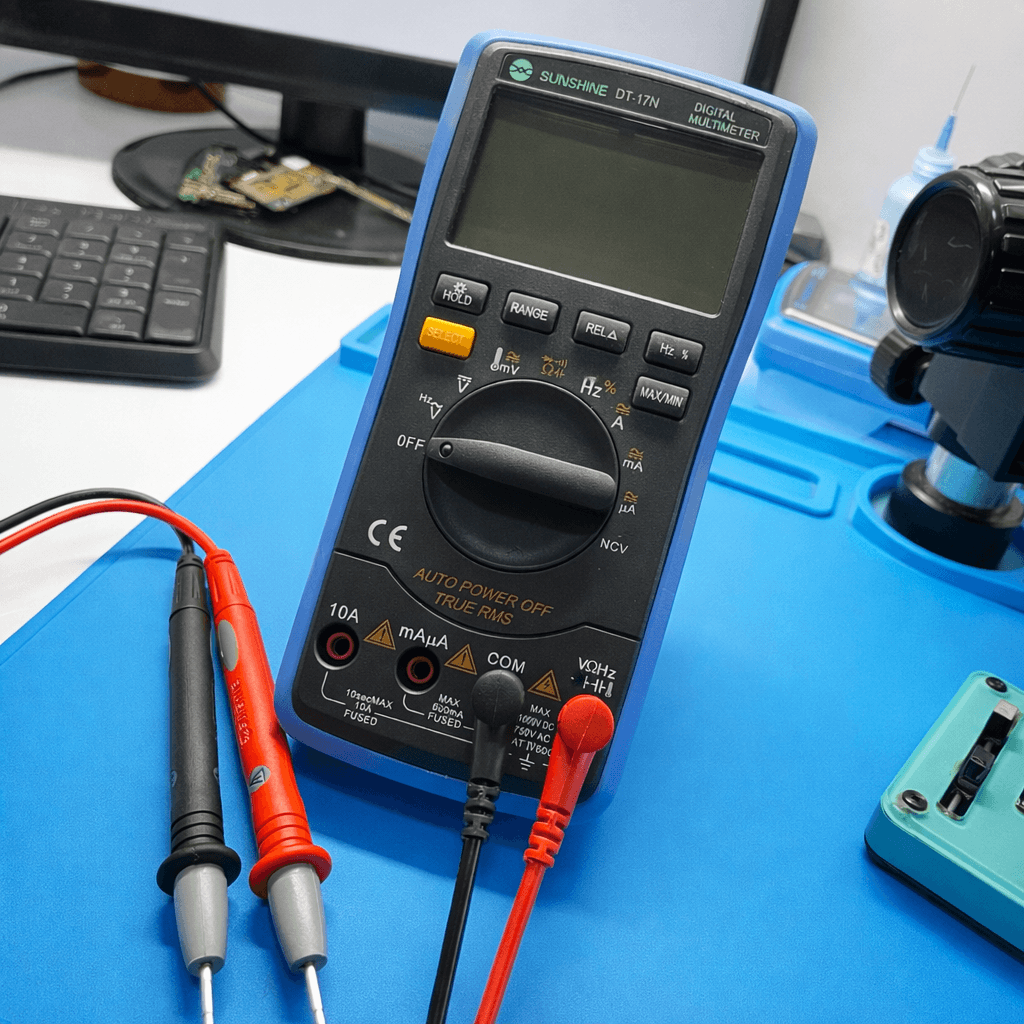
1. What is Resistance?
Resistance is the opposition to the flow of electrical current. Smartphone components such as resistors, coils, and IC pins have specific resistance values that regulate voltage and current.
- • Measured in Ohms (Ω)
- • Controls current flow
- • Detects short & open lines
- • Identifies damaged components
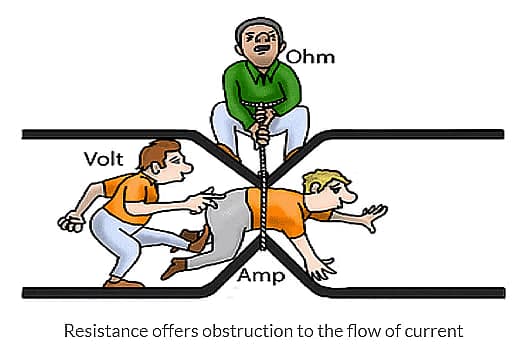
2. Sunshine DT17N Overview
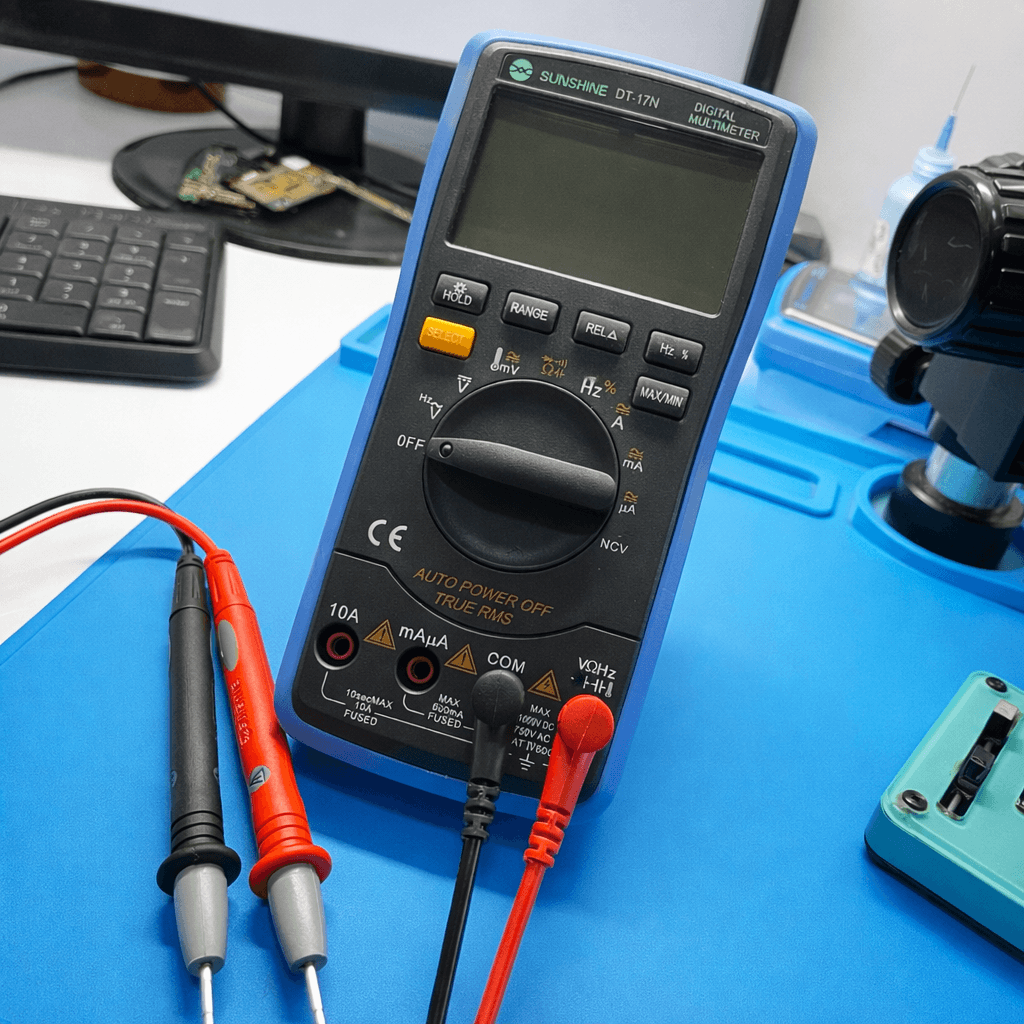
- • Auto Range Resistance Mode
- • Continuity & Diode Testing
- • Large Digital Display
- • Stable Measurement Accuracy
3. How to Set Resistance Mode
Always ensure the device is powered OFF before measuring resistance. Use Ω (Ohm) mode.
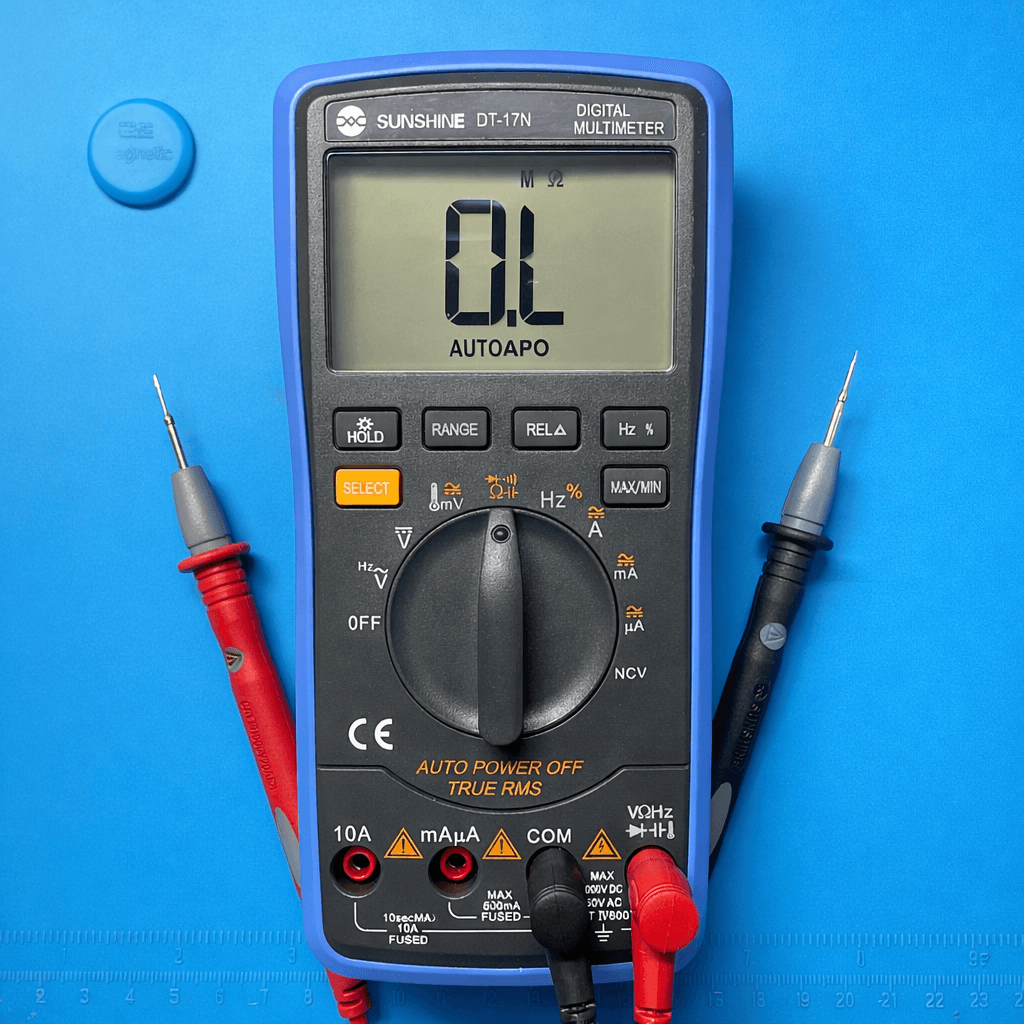
- 1. Turn rotary switch to Ω
- 2. Black probe → COM
- 3. Red probe → VΩ
- 4. Power OFF the phone
4. Measuring Resistance on Board
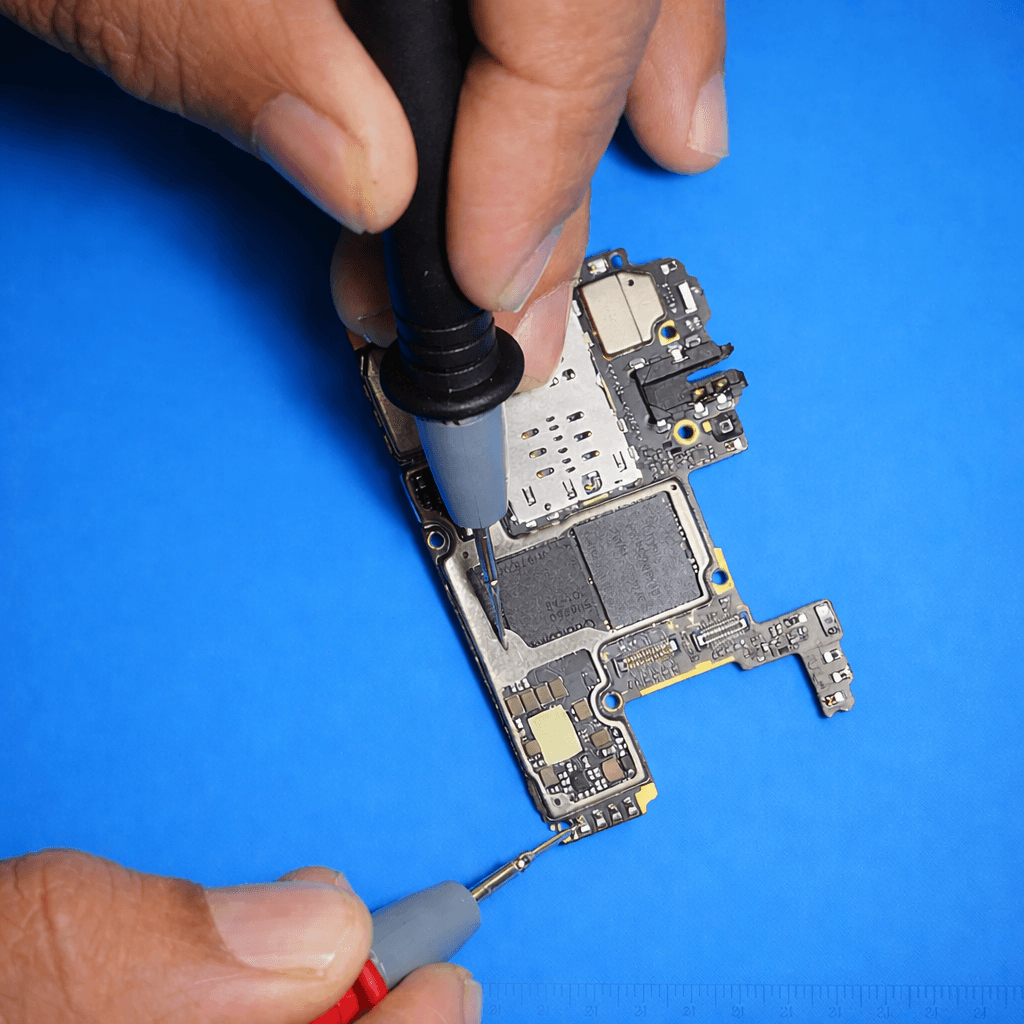
- • Phone must be powered OFF
- • Black probe on GND
- • Red probe on test point/connector pin
- • Read resistance value
5. Common Resistance Values
| Component | Resistance | Purpose |
|---|---|---|
| Pull-up Resistor | 10kΩ – 100kΩ | Signal stability |
| Coil | 0.1Ω – 2Ω | Power filtering |
| VBAT Line | 100Ω+ | Normal condition |
Safety Tips
- • Always power OFF the phone
- • Never measure resistance on live circuits
- • Avoid probe slipping
- • Use fine probes for SMD parts